Astronomy & science · first seen 18 Aug, updated 18 Aug
Astronomers reported a new kind of cosmic object in Nature on 12 August 2026: a “black hole star” roughly the scale of a solar system, whose star-like envelope is powered not by nuclear fusion but by a feeding black hole. The discovery may finally explain the hundreds of mysterious Little Red Dots JWST has been finding throughout the early universe.
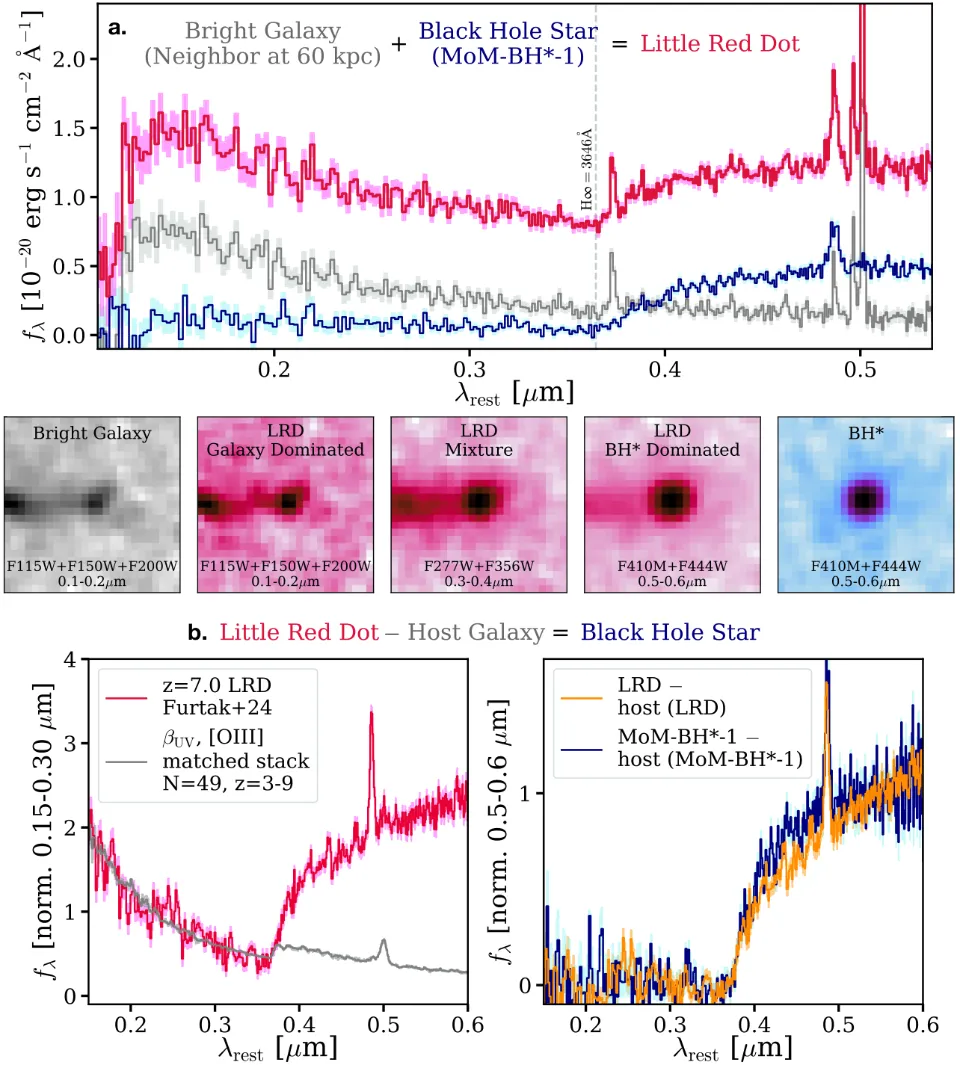
MoM-BH*-1 may isolate the gas-wrapped accreting-black-hole component that, when mixed with a young host galaxy, produces the spectrum of a typical JWST Little Red Dot. The post Astronomers reported a new kind of cosmic object in Nature on 1…
Summary from SpaceDaily.