Astronomy & science · first seen 20 Aug, updated 20 Aug
The James Webb Space Telescope has found an object from just 660 million years after the Big Bang that looks remarkably like a star but shines with roughly 100 billion times the Sun’s luminosity — far too bright to be powered by normal stellar fusion. The best explanation is a growing black hole wrapped in an extraordinarily dense hydrogen envelope spanning roughly the size of the Solar System.
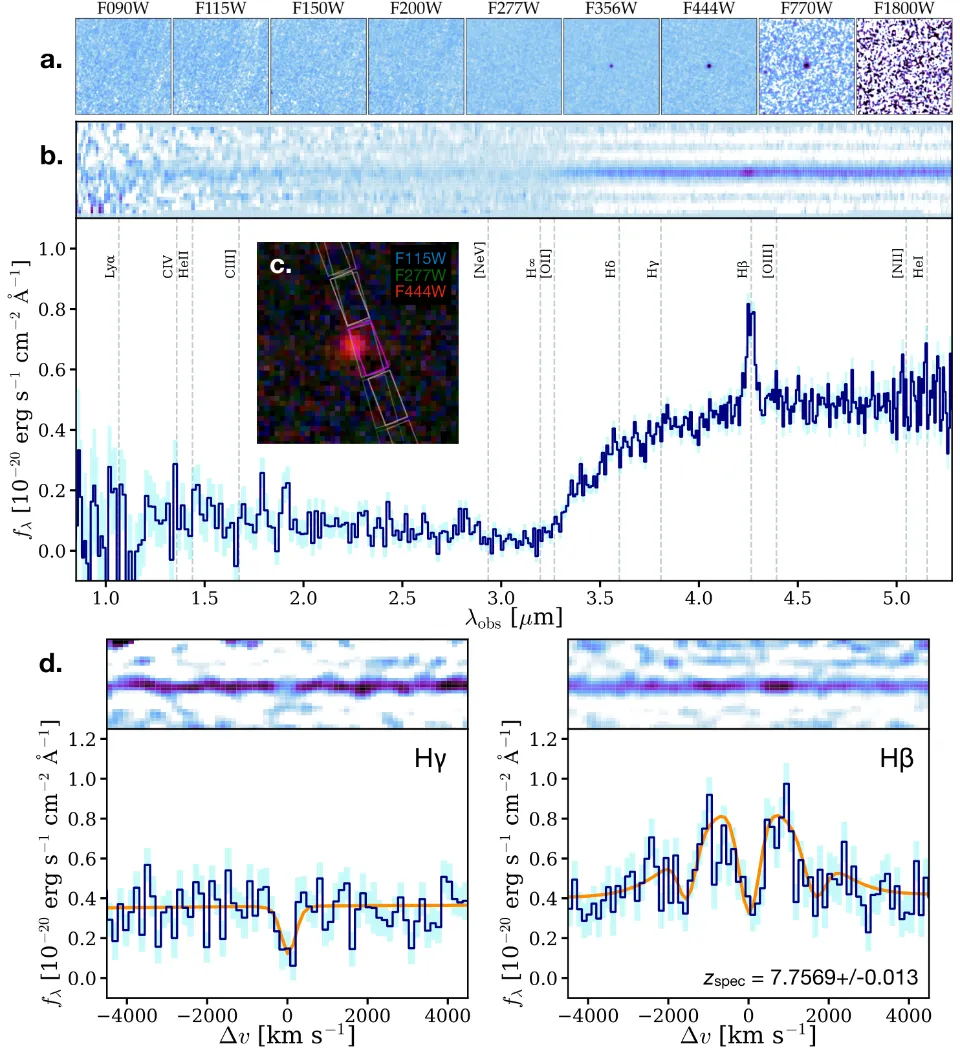
MoM-BH*-1 emits roughly 100 billion Suns' worth of power. Webb measured the spectrum; the Solar-System-scale hydrogen envelope comes from the model that best fits it. The post The James Webb Space Telescope has found an object from just 660…
Summary from SpaceDaily.